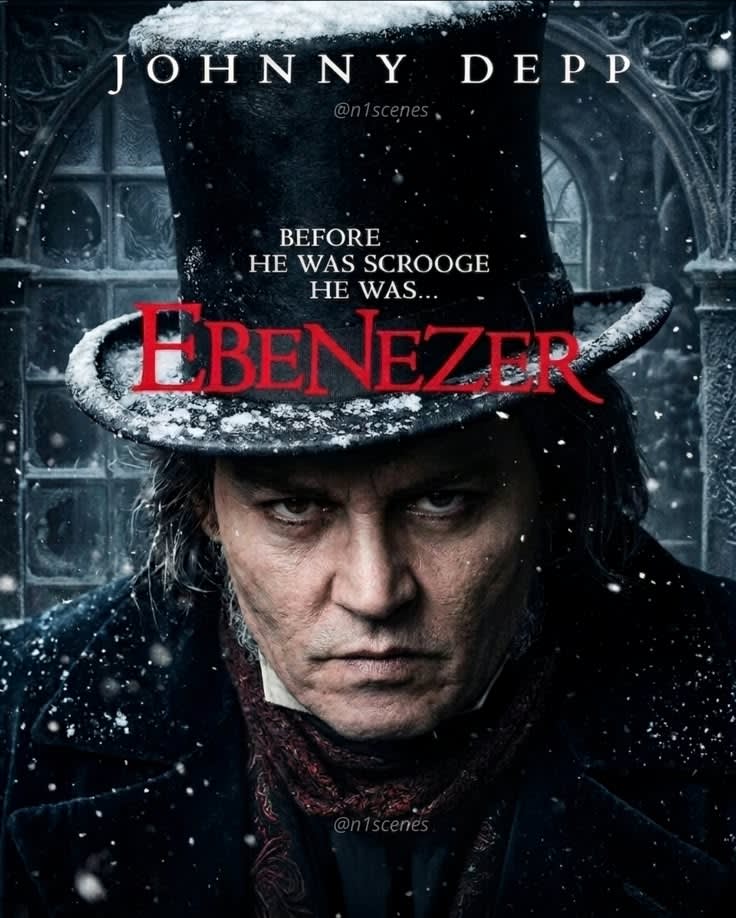
Ebenezer opened in theaters on November 13, 2026, with Johnny Depp playing Ebenezer Scrooge in Ti West's take on A Christmas Carol. The official setup emphasizes a supernatural journey through the past, present and future. Here's the confirmed release, cast and viewing context checked on November 14, 2026, including a runtime difference worth understanding before you plan an outing.
When does Ebenezer come out?
Paramount lists November 13, 2026, as the theatrical date on its official movie page. Use the full current title and Depp's name when searching, especially if an older listing includes A Christmas Carol as a subtitle.
The studio page links to trailers and tickets, but your selected local performance is what establishes where and when you can go. Check that performance before coordinating with others. A national date isn't a seat reservation or a promise that every theater offers the same formats.
Who does Johnny Depp play?
Depp plays Scrooge, the central character in this retelling of Charles Dickens' A Christmas Carol. That role is confirmed directly by Paramount; it isn't just an inference from an early casting report.
If you're following the actor, our Johnny Depp page is the separate place for broader coverage. This preview stays with the film's public credits and setup rather than turning a new role into an unsupported narrative about his personal life.
Who else is in the cast?
The studio's content catalog identifies Rupert Grint as Bob Cratchit, Andrea Riseborough as Christmas Past, Sam Claflin as Fred, Daisy Ridley as Clara, Arthur Conti as young Ebenezer, Ellie Bamber as Belle and Tramell Tillman as Christmas Present.
Paramount's movie page also lists Henry Lloyd-Hughes, Charlie Murphy and Ian McKellen. Ti West directs. Those credits establish the ensemble, but they don't establish the length of each role or confirm a theory about how a particular scene will play.
What kind of Christmas story is this?
The official catalog describes a ghost story set in Dickens' London, following a man's encounter with his past, present and future and a chance to change. The BBFC's cinema classification record identifies it as a retelling of A Christmas Carol.
For a spoiler-light decision, the key is that the supernatural material is part of the advertised experience. You can recognize the classic premise without assuming this adaptation has the same tone as another version you've seen.
We'd avoid using a familiar story title as a substitute for current viewing guidance. An adaptation can preserve the broad setup while making different choices in atmosphere, pacing and presentation. This guide doesn't claim to have watched the finished film or measured its faithfulness scene by scene.
Is it a gentle holiday movie for young children?
Don't assume that from the Christmas setting alone. The BBFC describes moderate horror, threat and violence, including sustained supernatural threat and some jump scares. Its guidance also notes themes involving death, illness and emotional distress.
A holiday setting doesn't settle who the film suits. Read the current content guidance for your region and consider the individual viewer. The BBFC record covers a UK-classified version; it shouldn't be silently converted into a US age rating.
If you're choosing for a mixed-age group, decide whether everyone wants a ghost story before buying tickets. You can read the broad content categories first and open detailed guidance only if needed, since the classification page warns that its notes can contain spoilers.
How long is the movie?
The BBFC lists its UK 2D cinema version at 115 minutes 56 seconds, approximately 116 minutes. Paramount's content catalog gives a broader 120-minute listing. Those are different records, so this guide doesn't present either as a separately verified final US runtime.
Check the version you intend to see. For scheduling, use your exhibitor's current information and allow whatever extra time you need for the trip. Don't interpret a rounded catalog field as proof that a precise classification record is wrong.
The Dickens story behind the new movie
A Christmas Carol predates cinema by decades. The Charles Dickens Museum's first-edition record dates its publication to 1843. The museum notes the colored illustrations and costly production, alongside an effort to cap the price for readers. This was a deliberately presented book as well as a story that later found other forms.
That history helps separate the source from this particular adaptation. Depp is playing Dickens' Scrooge in a new screen version; the character wasn't created for the 2026 film. Knowing the premise still leaves room to discover how West tells the story.
For an introduction, keep the book's world and the film's verified credits side by side. The old publication date establishes the literary background. Paramount's current pages establish who is making this movie and how it is being released. Neither source replaces the other.
Why the story involves more than Christmas decoration
Penguin's account of the book's origins places it against difficult conditions in the 1840s, including unemployment, rising food costs and child labor. It connects Dickens' concerns with poverty and education to the book's interest in kindness and the possibility of change.
The publisher describes Dickens considering a protest pamphlet before deciding on a story with greater emotional reach. That background gives a reader a useful question for any adaptation: how do the frightening encounters relate to the way people treat one another?
It doesn't tell us which passages this film includes or how an audience will respond. We wouldn't turn an explanation of the novel's origins into a claim about a scene we haven't verified in the movie. Keep that distinction in mind when a review compares the new version with Dickens.
Questions for comparing this version with the book
The British Library's essay by John Sutherland examines the story's treatment of Victorian poverty, labor and Christmas. It is a useful companion for readers who want context beyond a plot summary, particularly the connection between a person's values and the society around him.
After watching, consider what the adaptation asks you to notice about Scrooge before each supernatural encounter. Does your understanding change through dialogue, an image, a performance or a contrast with another character? These are editorial prompts for discussing the film, not a description of its unverified scenes.
You can also ask what a version gains by leaning into the ghost-story atmosphere. Frightening material may change how you experience a familiar premise, but a classification category alone doesn't settle whether those choices work. Discuss the effect after seeing it, with examples from the version you actually watched.
If the group includes someone new to the story, save comparisons involving later events until everyone is ready. Knowing a classic well doesn't mean another viewer wants its whole journey explained before their first encounter with it.
Should you read or rewatch A Christmas Carol first?
We'd make that optional. If you enjoy comparing adaptations, revisit a version you know and note what you want to look for. If you prefer a fresh viewing, the basic official premise gives you enough context to decide whether the film interests you.
For a group conversation, ask about tone and expectations rather than predicting the whole plot. A familiar story can invite comparison without requiring everyone to have the same favorite version. Save detailed differences for afterward.
What should you check before going?
Check the local performance, current viewing guidance and listed duration, then decide whether this is the kind of seasonal film your group wants. Treat the cast and premise as reasons for interest, not proof of quality.
Our Avengers: Doomsday guide covers another theatrical option separately. This article is a sourced preview of Ebenezer, with no review score, box-office prediction or unannounced streaming promise.
Planning an opening-weekend visit
With the announced opening now past, use the theater's current schedule rather than an old trailer's release reminder. Compare the selected performance's duration with the time your group has available, especially if you're arranging dinner or a ride afterward. The catalog and classification records above explain why you may encounter different numbers while searching.
For a mixed-age outing, let one person check detailed content advice first if the rest want to avoid spoilers. Share the broad concerns and let each household decide what suits its viewers. You don't need to recount the scenes behind every classification category to make the plan clear.
Afterward, compare expectations with the experience before looking up other people's rankings. Someone may have come for Depp, someone for Dickens and someone for a seasonal ghost story. Starting with those different interests can make the discussion more useful than trying to agree immediately on one favorite adaptation.
Frequently asked questions
Is this an adaptation of A Christmas Carol?
Yes. The BBFC identifies it as a retelling of Dickens' story. The official campaign centers on Depp as Scrooge and a supernatural encounter with past, present and future.
Is Ti West the director?
Yes. The studio page and classification record identify West with the film. This guide doesn't infer the finished tone from the director's name alone.
Why do some pages say two hours?
Paramount's catalog lists 120 minutes, while the UK cinema classification is more precise and shorter. Check your specific theater's listing rather than assuming every catalog field describes the same version.
When will it be on a streaming service?
No streaming date was verified in the sources checked for this article. The November announcement is a theatrical release date.