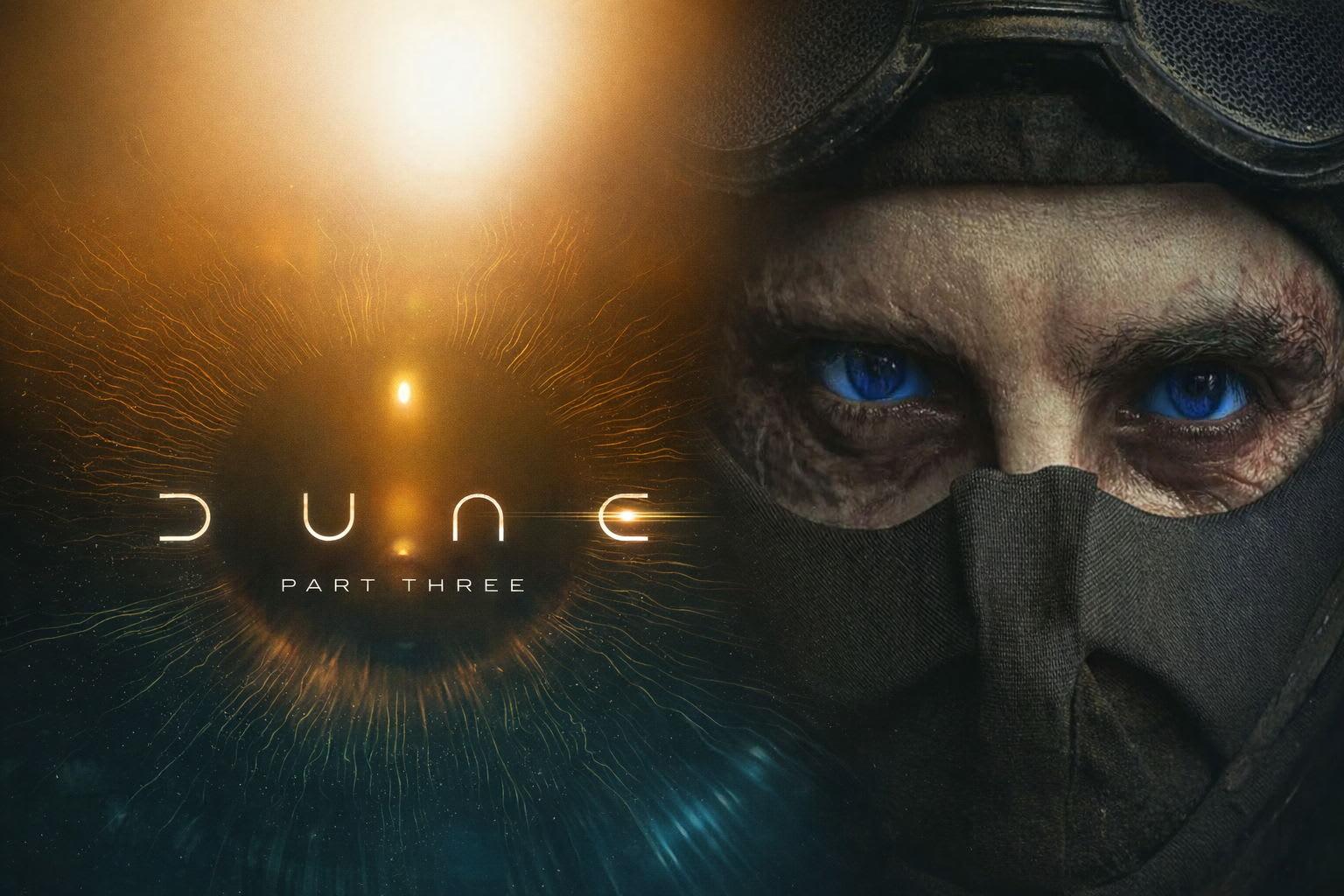
Dune: Part Three opens in North America on December 18, 2026, with Denis Villeneuve directing and Timothée Chalamet and Zendaya among the returning stars. If you're planning a December trip, the useful November development is the return of the earlier films to IMAX. This guide checks the official release and booking information as of November 14, 2026, without treating the novel as a scene-by-scene film spoiler.
When does Dune: Part Three come out?
The North American date is December 18, 2026, according to the official Warner Bros. trailer. International releases begin December 16, so a date seen in an overseas listing doesn't necessarily mean the US opening has changed.
The studio site also advertises Dune Insider early-access screenings on December 14 and 15. Treat those as specific events, rather than assuming every theater has moved its opening. Check the theater, city and screening label before buying, especially if you're comparing screenshots shared by fans in different countries.
Who is in the cast?

The official ensemble includes Chalamet, Zendaya, Jason Momoa, Florence Pugh, Rebecca Ferguson, Isaach de Bankolé, Charlotte Rampling, Anya Taylor-Joy, Robert Pattinson and Javier Bardem. Villeneuve directs from a screenplay credited to him and Brian K. Vaughan.
A cast list tells you who's credited, but it doesn't tell you how much screen time each performer gets. Avoid turning a familiar name into a promise about a character's importance. If you're following the leads rather than the franchise, our Timothée Chalamet profile and Zendaya page are separate starting points.
What is the story about without major spoilers?
The studio describes Paul as emperor nearly two decades after taking power, facing the consequences of his rule and a conspiracy involving Chani. That's the useful setup for a newcomer deciding whether to catch up, rather than a full explanation of the film's ending.
The distinction matters with an adaptation. A book discussion can correctly describe the novel and still tell you something the film handles differently. If you want to keep the experience fresh, stick to the official synopsis and trailers, and save detailed character theories for afterward.
A quick catch-up on the earlier movies
The easiest route through this version of the story is Dune, followed by Dune: Part Two, and then the new film. You'll stay with the same screen adaptation throughout the story.
Legendary's description of the first film introduces Paul as a young man traveling to a dangerous planet to protect his family and people. On a rewatch, pay attention to what he knows at the beginning and what he learns through experience. That is a more useful preparation than trying to memorize a glossary before the opening scene.
The studio's Part Two page describes Paul joining Chani and the Fremen while pursuing the people responsible for his family's destruction. It also frames his dilemma around personal love, a larger political future and the terrible possibilities he can foresee. The page dates that film's release to March 1, 2024.
Those premises explain the shape of the catch-up: first meet Paul and the world, then follow the alliances and choices that bring him toward power. Part Three's official premise begins after he has become emperor. You can understand that progression without a list of every death, revelation or final-scene detail from the earlier films.
If you're watching with someone who has already seen both, agree on a spoiler boundary. Asking them to explain a term after a scene is different from asking what the next film will do with it. A brief explanation can keep you oriented without turning your rewatch into a lecture on the novels.
Why the book's time jump and the movie's differ
There is a specific reason not to paste a novel summary into a movie preview. Hachette's Dune Messiah description puts its story twelve years after Paul's victory over House Harkonnen. The film's studio synopsis says nearly two decades after he took the Imperium. These are descriptions of two different works.
The publisher presents the book as an examination of the consequences of victory and war. Paul has enormous political power but faces continuing conflict and challenges to his rule. That gives a reader a broad sense of the material without requiring the details of its conspiracies or ending.
A different stated interval doesn't, by itself, tell us how every age, relationship or event has been adapted. We'd wait to see the film before declaring a particular scene removed or a character rewritten. For advance reading, label a detail as belonging to the novel when that's where the evidence comes from.
What to listen and look for on a rewatch
Try following one relationship rather than pausing for every proper noun. Notice how Paul speaks with Chani compared with how he addresses a wider audience. Then consider whether the expectations placed on him match his private concerns. These are viewing prompts, not claims about a scene in the unreleased film.
You can also focus on the difference between a character's prediction and what the film has actually shown happening. A vision isn't automatically an event that has already occurred. Keeping that distinction in mind helps when discussing a series that explicitly places foreseen futures inside its premise.
Afterward, write down the questions you want the next installment to answer before opening an ending theory. It's an easy way to keep your own reaction separate from a fan explanation that may draw on later books. You might prefer to return to those notes after the December screening.
What does IMAX actually confirm?
IMAX says the film was partially shot with IMAX film cameras and includes over an hour of its expanded aspect ratio. Its official film listing also identifies participating IMAX 70mm locations and directs viewers to local exhibitors for current availability.
Before you book, separate three questions. Does your theater have a screening, what format does that particular screening use, and are acceptable seats still available? One answer doesn't settle the other two.
Open the actual showtime, rather than relying only on the theater's name.
Read the format label on that performance.
Check the seat map before committing to a longer trip.
Read refund and exchange terms if you're coordinating a group.
IMAX also lists conditions for collectible filmstrips at qualifying performances. Don't assume every ticket includes one or that an offer applies outside its named dates and locations. If the collectible is your reason for traveling, check the full terms before paying.
Can you rewatch the earlier films in theaters?
Yes. After the November 13 double feature, IMAX lists separate showings from November 14 through November 18, with a sneak peek of the new film. That's a concrete catch-up option to check now, rather than waiting until your December screening is close.
We'd favor separate showings if a long double feature would make the evening feel like homework. If you already know the earlier films well, a rewatch is optional; focus on the relationships and political choices you want to remember. You don't need to memorize every unfamiliar term to follow a character's motivations.
Should you read Dune Messiah first?
Read it first if you enjoy comparing an adaptation with its source; wait if you want to avoid learning where the literary story goes. Penguin Random House lists Dune Messiah as book two, continuing Paul's story as Muad'Dib, and lists a movie tie-in edition for November 17, 2026.
That numbering can be confusing: a third film doesn't make this the third novel. The publisher also lists later books, so the conclusion of a director's film trilogy shouldn't be read as a claim that the entire literary series ends there.
For a group booking, agree on one exact performance before anyone buys separately. Send the venue, date, format and start time together so friends can choose adjacent seats in the same auditorium.
Which screening should you choose?
We'd choose the screening you can comfortably attend. Compare the actual format, seat position, total cost and travel time before deciding that a special format is worth a separate journey. A desirable label on a poor seat isn't automatically your best evening out.
If you're choosing between December releases, our Avengers: Doomsday guide covers the other film separately. Recheck booking details before publication or purchase; this article is an advance planning guide, not a review or a guarantee of local inventory.
Frequently asked questions
Is the movie already available to stream?
The official campaign describes a theatrical release. We haven't verified a streaming date in the sources checked for this guide, so don't plan around an uncited subscription-release calendar.
Is every IMAX screening a 70mm presentation?
Choose by the format attached to the individual showtime. The IMAX listing names participating 70mm locations, but local inventory and screening details still need checking.
Do you have to read the books?
We'd treat reading as an optional companion to the films. If keeping the story unspoiled matters to you, avoid detailed novel summaries until after your screening.
Does the third movie finish all the books?
The studio presents it as the conclusion of Villeneuve's trilogy. The publisher lists a longer literary series, so those are different kinds of ending.