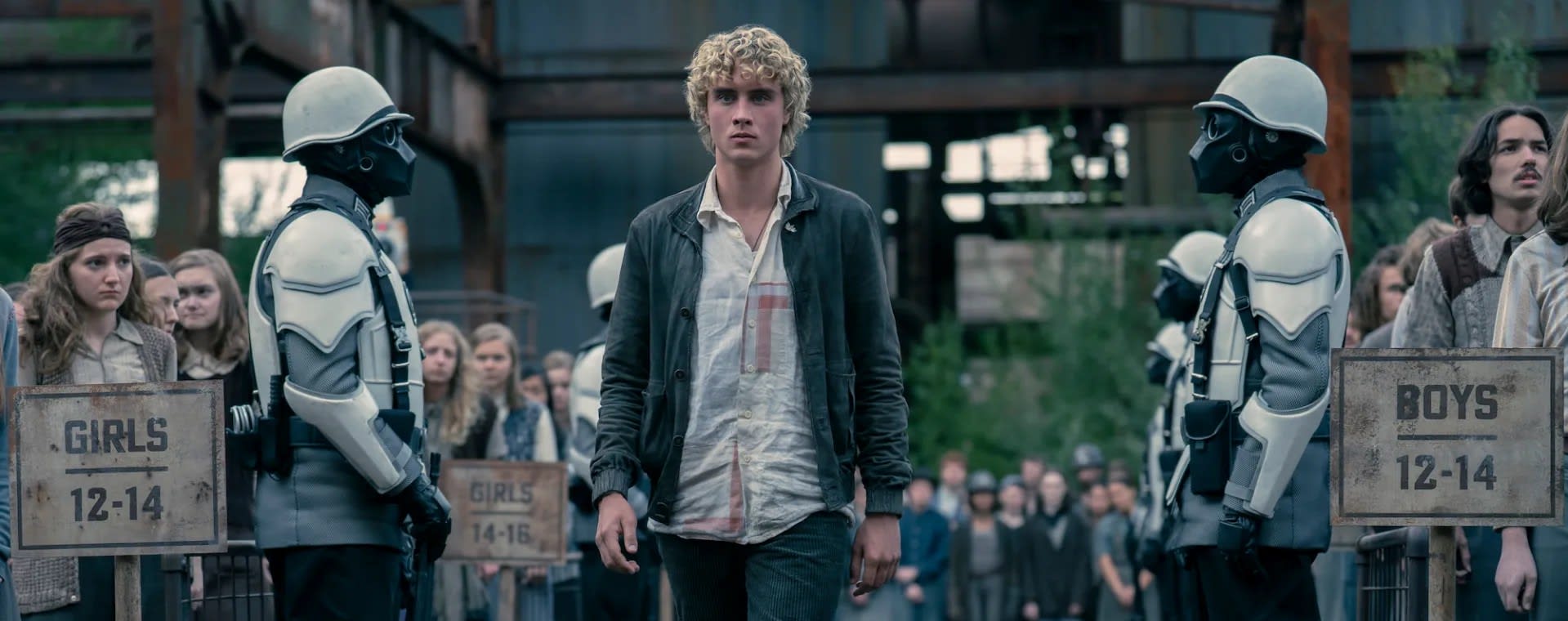
Sunrise on the Reaping reaches US theaters on November 20, 2026, taking The Hunger Games back to a young Haymitch Abernathy. It follows the Second Quarter Quell, before the story of the original trilogy. Here's what the studio, publisher and theater listings establish as of November 14, 2026, with major story spoilers left out.
When does Sunrise on the Reaping come out?
The North American theatrical opening is November 20, 2026. Lionsgate announced that date in June 2024, and the publisher and current exhibitor listing checked for this guide agree.
When booking, use the local theater's calendar. A national opening date isn't a promise that every location has every preview, format or evening performance. If you're planning with friends, send the exact theater and showtime rather than just the movie title.
Where does the story fit in the timeline?
The story takes place 24 years before the original Hunger Games, beginning with the reaping for the 50th Games, also called the Second Quarter Quell. Scholastic's reader guide identifies the central character as 16-year-old Haymitch and explains that twice as many tributes are taken.
That's enough background to understand the premise without reading an ending explanation. A prequel can have familiar names while following an earlier stage of their lives. We'd avoid character-fate summaries if your goal is to experience this chapter without advance knowledge of every turn.
Who is in the cast and who directs?

Scholastic's January 2026 film announcement lists Joseph Zada, Whitney Peak, Mckenna Grace, Ralph Fiennes, Elle Fanning, Kieran Culkin, Maya Hawke, Jesse Plemons and Glenn Close among the ensemble. It confirms Francis Lawrence as director and Billy Ray as screenwriter.
The distinction between an old announcement and a later credit matters here. The original Lionsgate notice described the director as being in talks; the later publisher release gives the film credit directly. We use the later information instead of carrying an early negotiation into a current cast-and-crew guide.
Don't read a cast list as a complete scene guide, though. It doesn't establish how long someone appears or confirm an unannounced cameo. Those details should come from an actual credited release or a clear official announcement.
Who are Joseph Zada and Whitney Peak playing?
The central casting is more specific than a list of famous names. TheWrap's April 2025 casting report, covering Lionsgate's announcement, identifies Zada as Haymitch and Peak as Lenore Dove Baird, his girlfriend. That introduces the relationship without revealing where it leads.
The report also identifies Nina Jacobson and Brad Simpson as producers through Color Force. Their role is separate from the directing credit and Billy Ray's screenplay credit. It is useful to keep those jobs distinct when looking up an interview about how the book became a movie.
For a viewer coming mainly for one actor, start with the character name and the official premise. An ensemble can include recognizable performers while keeping its attention on the younger leads. The cast list alone doesn't establish whose scenes dominate or which performance you'll prefer.
Is it the fifth book or the sixth movie?
Both descriptions are correct. Scholastic calls Sunrise on the Reaping the fifth novel and its adaptation the sixth feature film, so those numbers refer to different formats.
The easiest fix is to check what the number describes. Use the full title when looking for tickets, and check whether a list is discussing books or films. A reading list and a movie marathon aren't interchangeable simply because they share a franchise name.
The novel was originally published on March 18, 2025. Scholastic's edition announcement also lists a US trade paperback for August 4, 2026, and a movie tie-in for September 1. Those are book-edition dates, not additional theatrical openings.
How long is the movie, and what is it rated?
Cinemark currently lists PG-13 and a runtime of 2 hours 43 minutes on its movie page. We rechecked that listing for this update. Verify the timing of your selected performance as well, especially if you need to arrange a ride home.
For planning, leave room around the advertised performance and check the theater's own timing information. The content rating also isn't a personalized recommendation for a particular child. Read the current rating details and consider the viewer's comfort with the premise before arranging a family outing.
Is there an IMAX version?
Yes. The official IMAX page calls this the franchise's first Filmed For IMAX installment. It advertises more than forty-five minutes in its exclusive 1.90:1 expanded aspect ratio, with sound optimized for the presentation. Those are format details from IMAX, rather than a review of the finished film.
The specified duration matters: more than forty-five minutes of expanded imagery doesn't mean the whole movie uses that ratio. It also doesn't establish that every showing in a cinema complex is an IMAX presentation. Open the individual performance and read its label before choosing seats.
If you're comparing a premium showing with a standard one, include the journey and seat position in the decision. A later performance you can attend comfortably may suit your group better than rushing to the first available screening. Check subtitle or accessibility information on that same performance if someone needs it.
What ideas are worth discussing after the movie?
Scholastic's series reading guide groups questions about Sunrise around relationships, manipulation, partnerships and public opinion. Its focus goes beyond asking who survives. The guide asks readers to consider how the Capitol controls the story the public sees and how that story relates to a person's actual experience.
Use those themes as conversation starters after you've watched, while keeping film and book evidence separate. For example, ask which moment changed your understanding of Haymitch and what information caused that change. Then compare answers before opening a detailed explanation online.
Another useful question is who gets to describe an event. Does the audience hear directly from the person affected, or through someone with power over the presentation? This is an editorial viewing prompt, not a claim that a particular page or sequence has survived the adaptation unchanged.
The published reading guide includes plot details in its questions. If you're avoiding spoilers, don't browse the full document in advance just because it's labeled an educational resource. Save the detailed questions for after the relevant reading or screening, and agree on a spoiler boundary in any group discussion.
Should you read the book or watch the earlier movies first?
We'd choose according to how you feel about spoilers. Read first if adaptation choices are part of the fun; wait if you'd rather encounter the movie's version without knowing the novel's full story.
Catching up doesn't have to become an assignment. If you're going with a newcomer, explain the basic setup and ask how much background they want. That keeps a helpful introduction from becoming an accidental ending recap.
For readers who want a structured discussion, Scholastic offers a free guide with 27 lessons over roughly six weeks and conversation starters featuring film cast members. You can use selected questions rather than following a full classroom schedule at home.
A simple plan for a spoiler-free first viewing
Before the trip, decide what you want from a catch-up: the basic setting, an introduction to the earlier films, or a full reread. Those are different commitments. Someone who only wants the premise shouldn't have to sit through a video explaining every later consequence of Haymitch's story.
After the screening, compare your reactions before checking adaptation debates. If you read the novel first, say when you're drawing on something outside the film. That keeps the conversation welcoming for a friend who has only seen the screen version and wants to discuss what was actually shown.
What should you check before booking?
Check the local date, format, seat map and current runtime before paying. We'd also decide whether your group wants a spoiler-free opening-weekend trip or a more flexible later showing, then choose a screening that suits that plan.
Follow the studio on our Lionsgate page. If you're mapping out other large releases, our Avengers: Doomsday guide is a separate planning reference; it isn't a related chapter of this story.
For a book-club outing, share the meeting plan separately from plot discussion. Someone joining only for the movie should be able to find the theater details without scrolling through ending spoilers in a group chat.
Frequently asked questions
Is this a sequel to the original trilogy?
Its story is set before the original Hunger Games. Think of it as an earlier chapter in Panem's history, not the next event after the original trilogy.
Does the book release on the movie date?
No. The novel was originally published in March 2025, while the movie opens in November 2026. Paperback and tie-in editions have their own dates.
Are advance tickets listed?
Cinemark marks the film for advance tickets. Check availability by location, because a national listing doesn't guarantee a particular seat or performance near you.
Is a streaming date confirmed here?
No streaming date was verified in the sources used for this guide. We'd wait for a specific announcement rather than estimating one from another movie's release window.