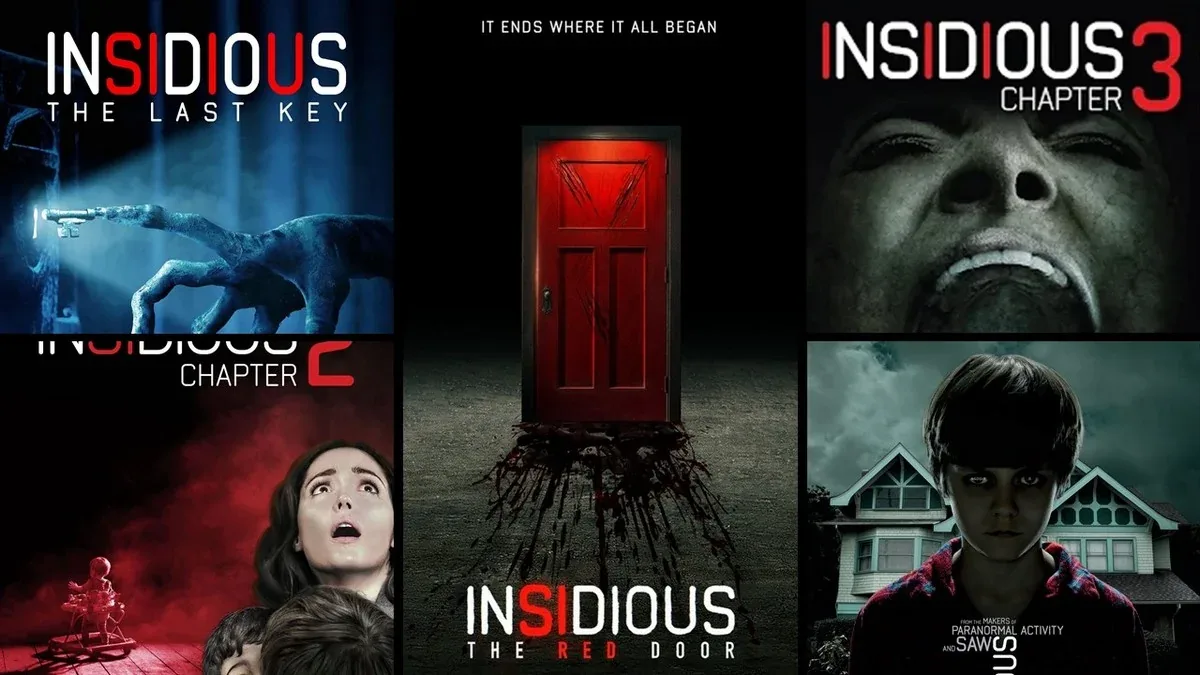
Watch the Insidious movies in order of release for a first visit to the Further: Insidious, Chapter 2, Chapter 3, The Last Key, The Red Door and Out of the Further. For main-story chronology, move Chapter 3 and The Last Key ahead of the original. The 2026 film belongs at the end of the released checklist.
What is the Insidious movies in order release list?
These are the six released features as checked on November 12, 2026. The table uses the original film's US theatrical release year rather than its festival-premiere year.
Movie | US release year |
|---|---|
Insidious | 2011 |
Insidious: Chapter 2 | 2013 |
Insidious: Chapter 3 | 2015 |
Insidious: The Last Key | 2018 |
Insidious: The Red Door | 2023 |
Insidious: Out of the Further | 2026 |
Use the full titles when searching a store. Chapter 3 is the third release, but it doesn't simply continue the action after Chapter 2.
Why is the first Insidious sometimes labeled 2010?
It premiered at the Toronto International Film Festival in 2010 before its wide US theatrical release on April 1, 2011. Sony's official film page explains that distinction.
Those labels describe the same first movie. Don't add a duplicate to your checklist, and don't assume a 2010 listing means you've found an earlier prequel.
What is the main-story chronological order?
Watch Chapter 3, The Last Key, Insidious, Chapter 2, The Red Door and Out of the Further. That's the broad main-events sequence in the JustWatch timeline guide.
Focus on the main events. Several films contain flashbacks, so sorting an entire movie by its oldest scene can put it in the wrong place for your watchlist.
We recommend keeping each film intact rather than stopping midway to splice in another entry. Release order introduces the ideas in a clear sequence for a newcomer; chronology can be a separate rewatch project.
What is the Lambert-family viewing route?
The smaller route is Insidious, Chapter 2 and The Red Door. The official Red Door page identifies the returning Lambert family and the continuation from Chapter 2.
Choose that three-film route if you want to focus on the family introduced in the original. You can add the prequels and the newer story afterward instead of assuming every branch must be watched before you can continue.
Where does Out of the Further fit?
It's the 2026 released entry and follows The Red Door in the broad chronology. The official Out of the Further page introduces Gemma and a new family.
The shared supernatural setting connects the franchise, but a new family doesn't mean you should place the film before the original. Use its full title and year to distinguish it from an older trailer, a collection heading or an announcement that still calls it upcoming.
Our Sony Pictures Entertainment page connects with studio coverage. For another horror-related film to plan separately, see our Ebenezer release guide.
What does the first Insidious introduce?
It begins with a family confronting disturbing events after moving, including their son's unexplained coma. Sony's premise identifies the family and the haunting as the starting mystery. You don't need a detailed explanation of the Further before watching; the movie provides the initial introduction.
For a first visit, begin with that film and continue to Chapter 2. Those opening releases give you the original family route before later movies move backward or shift their focus. We would let their connections unfold on screen rather than reading a complete timeline explanation beforehand.
The different year labels in catalogs don't create an extra starting film. A festival premiere and a later theatrical opening can belong to the same production. Match the full title and cast before assuming a listing marked 2010 is separate from the original shown as 2011 in this US-release table.
Which Insidious route should you choose?
Decide whether your goal is the full release history, a chronology rewatch or the Lambert-family films. Those are different selections, so give the plan a label before sharing it with someone else.
Goal | Route | Why choose it? |
|---|---|---|
First full watch | Follow all six releases in the table | Encounter the franchise as its films arrived |
Main-event chronology | Chapter 3, Last Key, original, Chapter 2, Red Door, Out of the Further | Revisit earlier-set main stories first |
Lambert-family focus | Original, Chapter 2, Red Door | Keep the smaller family sequence together |
The shorter family route isn't the whole franchise, and a chronology route isn't the order of theatrical releases. Naming the distinction avoids an argument about which list is correct when the lists are serving different purposes.
Why isn't Chapter 3 simply the next event after Chapter 2?
Its number identifies its release position, while its main story belongs earlier in the broad timeline. The franchise's later prequel direction also gives more focus to Elise. That makes the title sequence less literal than a newcomer might expect.
For release order, keep Chapter 3 after Chapter 2 and follow it with The Last Key. For the main-event chronology, put Chapter 3 first and The Last Key next. You don't need to change the films themselves to use either route.
We recommend the release sequence initially because it doesn't require a viewer to know why later films look backward. Once you have seen the stories, chronology becomes an optional way to revisit their relationships. You can understand the organizing choice without reading explanations of individual character outcomes.
Why don't The Last Key's flashbacks make it the first whole movie?
A flashback gives part of a story an earlier setting; it doesn't necessarily move the main action of the entire feature there. The timeline route in this guide follows main events, so The Last Key stays after Chapter 3 and before the original.
The same principle helps with other films that revisit childhood or earlier experiences. Sorting by the oldest scene is a different rule from sorting by the period in which most of a film's current story takes place. Choose one rule and state it clearly rather than switching between them halfway through the list.
For a practical watch, keep every film intact. Pause between features when you want a break, rather than trying to place another movie inside a flashback. The broad sequence is enough to organize a rewatch without creating a custom scene-by-scene version.
What does The Red Door continue?
It returns to the Lambert family. Sony identifies Josh and a college-aged Dalton at the center of the film, with Patrick Wilson, Ty Simpkins, Rose Byrne and Andrew Astor in the returning cast. Wilson also makes his directorial debut with this entry.
That returning family is why The Red Door fits the smaller route after Insidious and Chapter 2. You can choose that trio without treating the prequel films as intervening chapters in the family's immediate sequence. For the full release project, however, keep the prequels where the main table places them.
Before watching, avoid retrospective videos about what the family has been through if you haven't completed the earlier films. A title-only plan is enough preparation. Detailed recaps can reveal developments the original and Chapter 2 were designed to introduce while you watch.
What changes with Out of the Further?
The newer film introduces Gemma, played by Amelia Eve, and a different family at the center of the story. Sony's premise connects her with the Further. That gives the movie its own focus without requiring the guide to describe every supernatural development in advance.
Keep it after The Red Door in this broad checklist. A new family isn't an instruction to move it ahead of the original, and the shared setting doesn't mean you should call it another Lambert-family installment. Both the connection and the change of focus can remain clear.
If you are mainly interested in this film, you can explore that premise first, then decide how much earlier material to watch. For a full franchise introduction, our preference remains the original followed by release order. Those are viewing recommendations rather than claims that every viewer must complete the same preparation.
How can you avoid spoilers while following the route?
Write down the next full title and keep unresolved character questions for after the current movie. Timeline pages frequently explain endings while justifying their order, so they can reveal more than you need simply to choose a film.
When watching with fans, agree on the stopping point for discussion. After the original, discuss the original; after Chapter 2, expand to those two films. That keeps the shared watch enjoyable while preserving each later movie's own introductions.
Which order should you choose?
Use release order for a first watch, main-story chronology for a rewatch, or the three Lambert-family films for a shorter route. Keep flashbacks in context and check the individual film ratings and current availability before arranging a group viewing.
Frequently asked questions
Does Chapter 3 happen after Chapter 2?
It follows Chapter 2 in release order but is an earlier-set story. It begins the main-story chronology used here.
Should The Last Key go first because of its flashbacks?
Not in this main-events route. It follows Chapter 3 and comes before the original Insidious.
Is The Red Door the fifth film?
Yes, it's the fifth released feature on this checklist. Out of the Further is the sixth.
Are these movie events real-world claims?
This guide describes fictional supernatural stories and their viewing sequence. It doesn't treat the films as independent evidence of paranormal events.